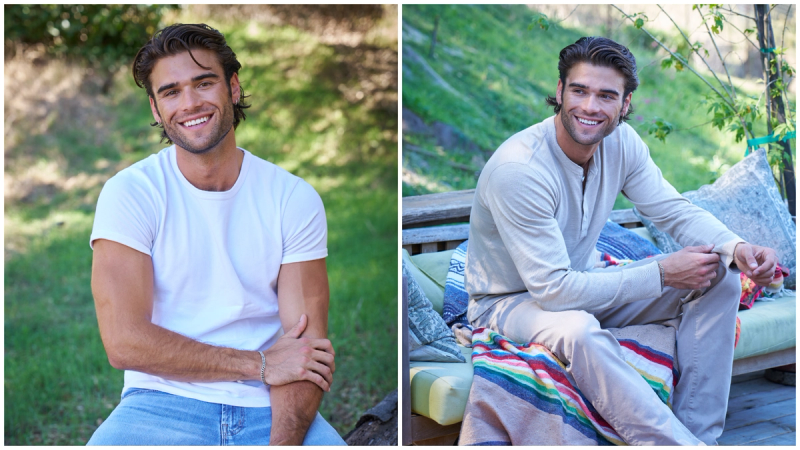
Hunter McVey didn’t take the usual path to Hollywood. Growing up with “a cornfield as a backyard,” he built a large following as a fitness creator on Instagram, TikTok and YouTube, which led to modeling work and then to his first acting role as Blue Bennings, a firefighter on ABC’s 9-1-1: Nashville. The show is now in its second season, and he counts Chris O’Donnell, Jessica Capshaw and LeAnn Rimes as his coworkers.
Off set, McVey is big on building wellness businesses of his own. Earlier this month, he launched BYN, a line of food-storage containers made from platinum-cured silicone that the company says contains no PFAS (“forever chemicals”) or microplastics. He also founded UVG Health, a telehealth company focused on peptides and hormone therapy, which he says is “built on education and transparency.”
We talked with McVey about breaking into acting, why he went from fitness content to founding two health companies and the grass-fed beef tallow in his routine.
Your character, Blue Bennings, shows some real emotional depth. What has working on 9-1-1: Nashville taught you about acting?
“Thank you. I couldn’t have dreamed up a character I’d rather play than Blue; it’s been such a blessing. To say the least, I was overwhelmed when I was thrown into this star-studded cast. I had panic attacks when I got the role, because I didn’t know the difference between a page number and a scene number, and we started filming a week later.
To my surprise, this incredibly talented group treated me like family from day one. They made me feel like I was supposed to be there, even though I felt the opposite. Since the start of the first season, I’ve tried to listen more than I speak around them. If you just watch and listen, you pick up something new every day from Chris, Jessica or LeAnn. They make acting look effortless.
Once I’ve learned my lines and know my character’s point of view and the objective of the scene, I try to turn off every other thought. I think a scene comes across best when I’m completely present and listening to the other characters. It’s more reacting than acting.
I have so much to learn, and I’m grateful to be surrounded by not only such a talented group but such genuinely good people. I feel like a kid playing pretend when I go to work every day. It’s a dream come true.”
You’ve gone from fitness creator to entrepreneur. How do you decide what’s worth building, and how do you keep the advice you give your followers separate from what you sell?
“It has taken a lot of failures and different career paths to figure out what’s worth building. Most of the time, it meant getting out of my comfort zone, trying something new, failing hard, then using what I learned to move in the right direction. Planning only gets you so far. The only way to learn what works, or what you like, is to take action.
I don’t know that there’s a way to keep the advice I give my followers completely separate from what I sell. I built my following around transparency, sarcasm and self-deprecating humor, and I treated social media as the opposite of a highlight reel. The more real I was, the more people responded, with posts like, ‘This is a day in the life of someone who makes money posting shirtless online: First, I hit snooze three times, stare in the mirror critiquing my body, then head to the gym.’ People connected with me calling things out in a way most don’t.
I shared my experience of being on [testosterone replacement therapy] and peptides at a young age: why I did it, and the many negatives that came with it. I got hate comments every single day, but I also got tons of comments from people saying it helped them make the right decision for their own lives. I try to focus on giving free value, being myself and showing what I truly use, like and dislike. I believe that credibility carries over into my businesses.”
What made food storage the product you wanted to build, and was there a moment that got you thinking about microplastics and forever chemicals in your kitchen?
“A lot of things shaped BYN and its mission. Health, wellness and transparency in those industries have mattered to me since I started my fitness journey at 12. That journey has been anything but linear. I went through stages of gaining weight, losing weight, fad diets and misinformation. I started sharing my experiences with training, food and lifestyle habits in hopes of helping someone like my younger self save time and avoid the mistakes I made.
Between social media, modeling and one-on-one fitness coaching, meal prep was part of my daily routine. After years of heating my meals in plastic containers, I learned how harmful microplastics can be, and I became terrified of how much was in my own body. I knew glass was a better option, but I broke multiple glass containers carrying meals through the airport. I thought there had to be a better solution, and there really wasn’t one. That’s when BYN was born.
Prioritizing health and self-care will never go out of style, and information is freely available now. As more people learn about the effects of microplastics, I wanted to offer them a solution and take at least one worry off their plate, because there’s enough in this life that’s harmful to us.”
Peptides and hormones are everywhere right now, and there’s a lot of misinformation out there. What do people get wrong most often, and how does UVG’s focus on education and transparency push back on that?
“The idea I’d most like to challenge is that it’s a magic pill. We strongly discourage anyone from starting hormone replacement therapy or peptides without proper education, bloodwork and solid foundational habits: training, diet and sleep. I created UVG Health so people could take control of their own health. That’s a lifelong journey, and there are no shortcuts or quick fixes. Our main goal is to provide continued education and make sure our patients never feel alone along the way.
Focusing on education and transparency since launch has come with challenges. We’re competing with thousands of ‘research use only’ companies that take advantage of loopholes and the lack of regulation in this industry. They can often sell ‘the same’ treatments for a fraction of what you’d pay at UVG. The catch is that they aren’t held to quality-control or sterility-testing standards, their products can come from underground labs anywhere in the world, there’s no physician oversight and the vial literally says ‘not for human consumption.’
We’re also competing with companies that have pushed AI to its limits to optimize revenue over old-school human connection. So much is handled by chatbots now, which I think is the opposite of what should be happening in health care. At UVG, real specialists call you from day one and walk you through the entire process. It’s not the most efficient approach, but that will never change.
We believe staying true to our values and offering the highest-quality treatment and patient experience will pay off as consumers get more educated about this crazy industry. I get to see our treatments change patients’ lives for the better every day, and that alone is worth any of the difficulties. I couldn’t be more excited about where we’re headed.”
Playing a firefighter is physical work, and so is being on camera for long hours. What does your skin care and grooming routine look like on a shoot day compared to a day off?
“There’s definitely a difference. On set, the hair and makeup team’s skill and passion are incredible. They make sure not a single strand of hair is out of place and that I always look my best.
At home, my grooming routine is minimal. I push my hair back with a natural oil (argan, castor or rosemary) and that’s it. My skin care stays the same either way. I like products with the most natural ingredients possible, not a laundry list of things I can’t pronounce. Lately, I’ve been using a combination of tallow from grass-fed cows and essential oils on my skin. It sounds crazy, but it works for me. I also think a huge part of skin care comes from eating a nutrient-dense diet of whole foods, limiting processed ingredients and staying hydrated.”
You spent most of your childhood in Indiana. What did you learn growing up about taking care of yourself that you still live by today?
“My backyard was a cornfield, and to this day I’m terrified of tornadoes. My Southern roots didn’t yield many health or nutrition tips. I ate a lot of biscuits and gravy, which kept me smiling ear to ear through most of my childhood. It also led to a size 38 waist in middle school. I’ve always just loved to eat.
What I picked up from my mother and grandmother was more about mindset. They showed me the importance of smiling and laughter, and they always encouraged me to be myself. I think that mattered more than any fitness tip could have.”