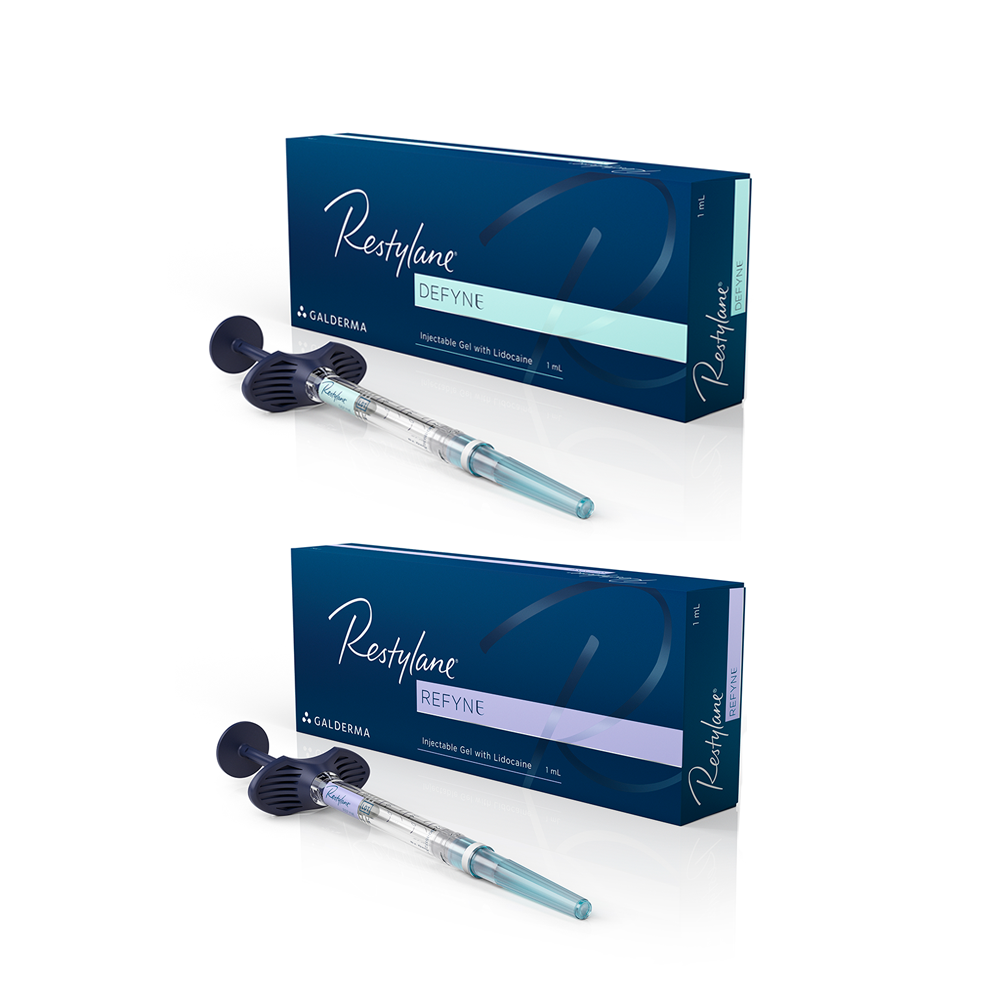
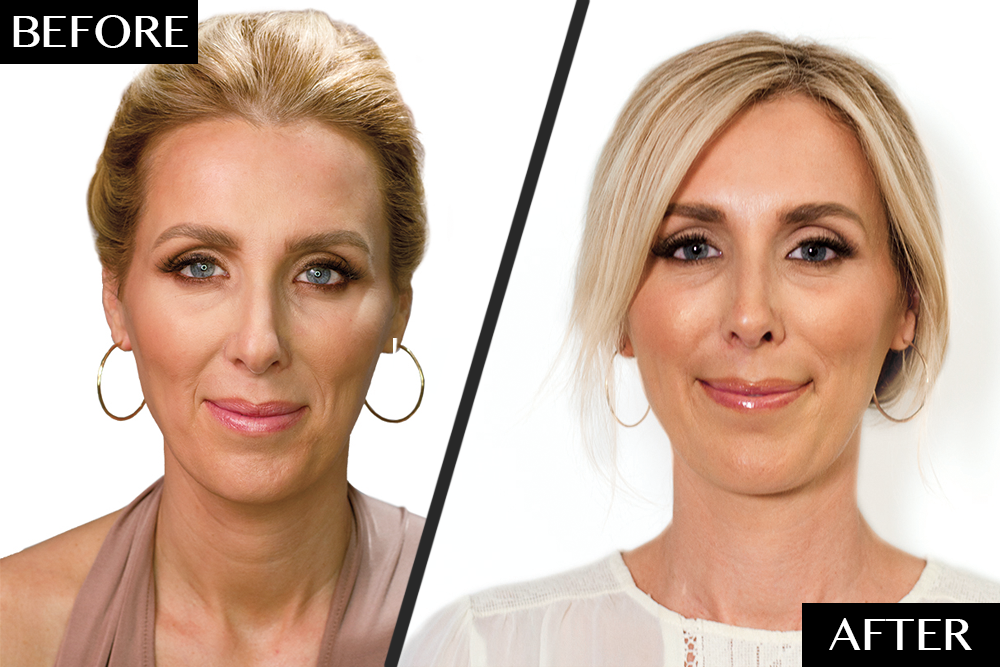
“Sarah is a beautifully expressive lady,” says Dr. Engelman. “Not only does she do a lot of work on camera, but she's also a mother who communicates in an animated fashion with her children. That said, she had age and expression-related volume loss and accentuation of her smile lines. Because she is in the public eye and is always talking on camera, it was imperative to choose a filler that allowed for flexible technology[3] to move with Sarah while she is presenting. Restylane Refyne and Restylane Defyne are so wonderful for the nasolabial folds because they allow for optimal volume restoration, while giving a smooth, flexible aesthetic that is unnoticeable, regardless of facial expression."
[1] Restylane Refyne. Instructions for Use. Fort Worth, TX: Galderma Laboratories, L.P., 2016.
[2]Restylane Defyne. Instructions for Use. Fort Worth, TX: Galderma Laboratories, L.P., 2016.
[3] Data on file. MA-32418 Study Report. Fort Worth, TX: Galderma Laboratories, L.P., 2016.
[4] Data on file. 05DF1502 Clinical Study Report. Fort Worth, TX: Galderma Laboratories, L.P., 2016.
Important Safety Information
Approved Uses:
Restylane® Refyne is for mid-to-deep injection into the facial tissue for the correction of moderate to severe facial wrinkles and folds, such as nasolabial folds, in patients over the age of 21.
Restylane® Defyne is indicated for injection into the mid-to-deep dermis for correction of moderate to severe, deep facial wrinkles and folds, such as nasolabial folds, in patients over the age of 21.
Contraindications:
Restylane Refyne and Restylane Defyne contain traces of gram-positive bacterial protein and are contraindicated for patients with allergies to such material or for patients with severe allergies that have required in-hospital treatment. They should not be used by patients with bleeding disorders, with hypersensitivity to amide-type local anesthetics, such as lidocaine, or by women who are pregnant or breastfeeding.
Possible Side Effects:
The most commonly observed side effects include swelling, redness, pain, bruising, tenderness, headache, lump formation, and itching at the injection site. Use at the site of skin sores, pimples, rashes, hives, cysts, or infection should be postponed until healing is complete.
These products should not be injected into the blood vessels as they may cause vascular occlusion, infarction, or embolic phenomena. Use with caution in patients recently treated with anticoagulant or platelet inhibitors to avoid bleeding and bruising.
As with all skin injection procedures, there is a risk of infection.
To report a side effect with any of the Restylane products, please call Galderma Laboratories, L.P at 1-855-425-8722.
Restylane Refyne and Restylane Defyne are available only through a licensed practitioner.
Complete Instructions for Use are available at www.RestylaneUSA.com.
© 2017 Galderma Laboratories, L.P.
All trademarks are the property of their respective owners.
USMP/REF/0040/0317a