Experts believe they may be on the path to a blood test that could ease one of the biggest fears breast cancer survivors carry: not knowing if it's coming back—a possibility that’s giving the breast-cancer community hope.
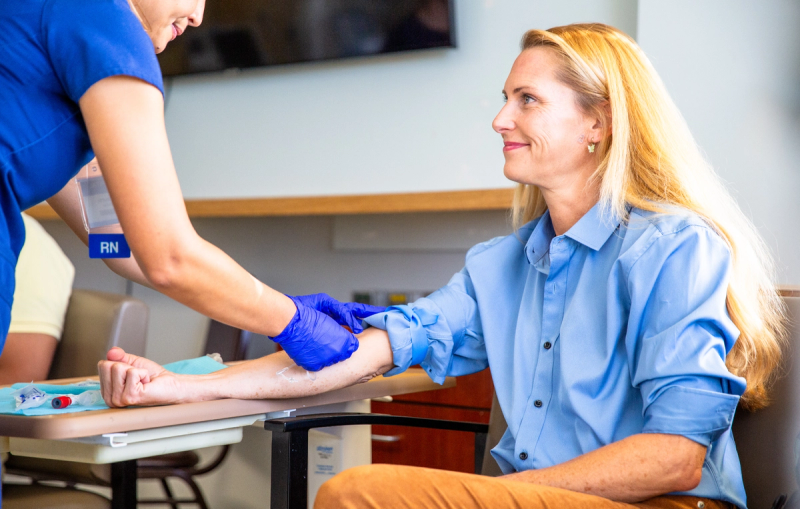
As published in JAMA Oncology, researchers have found that a “tissue-free” blood test can detect the return of breast cancer nearly eight months before it would typically show up on a standard mammogram. And unlike current versions of these tests, it doesn’t require a tumor sample to work.
These blood tests, known as liquid biopsies, hunt for tiny fragments of tumor DNA circulating in the bloodstream. But building one usually means having enough leftover tissue from a patient’s initial biopsy. Sometimes there just isn’t enough to work with, which means not everyone who could benefit from this kind of monitoring has access to it.
Which brings us back to what’s exciting researchers: the potential for a less invasive, tissue-free blood test that performs just as well as the standard biopsy version. To find out, researchers enrolled patients previously diagnosed with triple negative breast cancer, a more aggressive form with a higher risk of recurrence, running both tests side by side. The results felt like a small miracle: equal accuracy with no biopsy required, meaning more people could get the same early warning—and the same shot at catching their cancer before it spreads again.
Of course, catching a recurrence sooner is only half the equation. Researchers still need to prove that acting on those early blood signals actually improves outcomes down the line. But if it does, this kind of testing could one day become a routine part of follow-up care, giving doctors a chance to step in before cancer has the chance to spread.